
4 Questions to Answer Before You Talk to a Lender in Ventura County
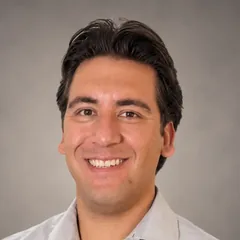
You are thinking about buying a house in Ventura County, and the next step everyone tells you to take is the lender call. For a lot of first time buyers that call feels like a test you did not study for. The lender asks about your budget, your savings and your timing, and you are not quite sure where you stand.
This post is the written version of my video above. I am a Ventura County Realtor and a licensed mortgage loan originator, so I know both sides of that call. When a buyer walks in already knowing these four answers, the conversation changes. Instead of the lender telling you what you can borrow, you tell the lender what you want, and the plan gets built around your numbers.
Quick answer: Before you talk to a lender, know four things: the monthly payment you are comfortable with, all in; how much of your savings you are willing to use for the down payment and closing costs; when you want to move; and what kind of home you want to buy. Only you can answer those four, and they shape every number the lender gives you.
Why answer these before the lender call?
Because the lender is going to ask, and most buyers have not thought about it yet. In the video I put it this way: a lot of first time home buyers, when they go and speak with the lender, are not quite sure where they stand. Some are shy about the money questions. Some are just not as informed yet, and that is fine, it is why I made this list. Knowing the four answers ahead of time means you come into the conversation with a proactive approach, and the lender can work backwards from your numbers instead of handing you a maximum and leaving you to figure out the rest.
1. What monthly payment are you comfortable with?
Not what you qualify for. What you are comfortable paying every month, all in. That means the mortgage payment itself (principal and interest), property tax, homeowners insurance, and HOA dues if you are buying a condo or a home in an association.
Helpful note
What “all in” means on a mortgage payment
Lenders call the full payment PITI: principal, interest, taxes and insurance. Principal pays the loan down, interest is the cost of borrowing, taxes are your property tax split into monthly pieces, and insurance is your homeowners policy. If the home has an HOA, the dues sit on top of that. When you set your monthly number, set it for the whole stack, not just the loan.
Have that number in mind before the call. Whatever it is, $4,000 a month or $4,500, it is your number, and it is the first thing a good lender wants to hear. In my experience buyers often skip this one, and when the lender asks, they do not quite know. The point is simple: I want you to buy a house and still live comfortably in it, not have your whole lifestyle change because every dollar goes to the home.
Once you know your comfortable number, the lender can work backwards from it and show you buying power that stays inside that range. You may qualify for more. You can still say: “Even though I can go up to X, what price range keeps my payment at this number?” A good lender will tell you what is doable and what is not.
One more thing if you have rented your whole life. Buying is typically more expensive month to month than renting a similar place here, depending on where in Ventura County you rent, so the first quote can be a bit of a paradigm shift. Brace yourself, then decide what you are comfortable with.
2. How much money are you willing to use to close?
The second thing to know is how much of your savings you want to put into the purchase. Two big costs come together at closing: the down payment and the closing costs.
Helpful note
Down payment and closing costs are two different piles
The down payment is the part of the price you pay yourself; the loan covers the rest. Closing costs are the fees that put the loan and the sale together: lender fees, escrow and title, the appraisal, and prepaid taxes and insurance. The bank requires the down payment because it wants you invested alongside it. Closing costs are the pile you can sometimes get help with.
A lot of buyers tell me, “I want to put the least amount down.” I understand it, but it is hard to work with, because the least amount changes with the price. The minimum is a percentage of the purchase price, so the dollar figure moves as the price moves. For eligible buyers the minimum is typically 3.5 percent of the price on an FHA loan and often 5 percent on a conventional loan, and your own scenario depends on the program and your file. If you want the longer version, I wrote about whether you need 20 percent down, and the site has a guide to down payment assistance in California.
So instead of “the least,” tell your lender the number you are comfortable using. Say, “I have this much in savings, and I want to use up to this amount.” Then disclose everything, bank statements included. Some buyers are shy about showing their cards, and I tell them the lender is on your side here; my team is never going to put you into something you did not agree to. A good lender takes your figure, sets aside the down payment and the closing costs, and tells you which price point lands inside it.
Can the seller help with closing costs?
Sometimes. The down payment is what the loan program requires you to bring. Closing costs are different: they can be negotiated. If a home has been on the market for a while, 30 or 40 days or more, the buyer has more negotiating power, and I can write the offer asking the seller to credit part of the closing costs. A brand new listing with a line at the open house is a different story; that seller is holding out for a strong offer and is unlikely to give a credit. Loan programs also cap what a seller can contribute. On an FHA loan, for example, interested parties may contribute up to 6 percent of the sales price toward closing costs and prepaid items, and anything past that is treated as a reduction in the price. The site’s closing costs guide walks through the line items.
3. What is your timeline?
The third thing to know is when you want to move. People tell me, “I am not ready to buy for another three months,” and my answer is: great, let’s get you talking with my lending team now. There may be things to iron out in your loan profile first, credit issues or debts that need to be paid off, and that takes time. I say a 90 day runway is phenomenal. It is not required; I have seen people come in and be in escrow within a month. But do things ahead of time.
Consultations with my team are free. You lay out your goals, and I tell you what to do now so that when the time comes, three months, six months or a year out, you are in a good position instead of scrambling during escrow.
Here is why three months closes in on itself faster than you think. The pre-approval has to get done first. Then you have to find the house, which can take a week or a month, sometimes longer. Then escrow, which commonly runs 21 to 45 days. So if your target is within three months, reach out now. If it is further out, still reach out; a consultation now gives you a plan: where you are, where you want to be, and where you want to buy.
4. What do you want to buy?
Condo, townhome or single family home: it changes the loan. Not every condo or townhome is FHA eligible, and a townhome follows the condo rules only when it is legally a condominium. FHA insures loans on units in approved condominium projects, and the approval attaches to the whole complex, not to your unit. When a project is not on the list, a single unit can sometimes qualify through FHA’s Single-Unit Approval. If a complex does not qualify either way, that may move you to a conventional loan, which has its own condo review. So the type of home can change the loan you use.
Helpful note
How FHA condo approval works
FHA approves condominium projects, not neighborhoods. A project (the whole complex, run by its association) goes on FHA’s approved list when it meets FHA’s standards for things like the association’s finances and insurance. If the project is not approved, a single unit can sometimes qualify on its own through Single-Unit Approval. Because approval is by project, two complexes on the same street can land differently.
Condos and townhomes also carry HOA dues, and those dues count toward your monthly housing cost when you qualify, even though they go to the association and not the lender. If you are a first time buyer looking at the entry level, that matters, because Ventura County runs a wide range of price points: condos in Oxnard and Port Hueneme sit at one end, and homes in Camarillo, Ventura and Thousand Oaks spread across the rest.
Knowing what you want to buy first, or at least where you want to start, helps you and your lender strategize. If it is condos and you are set on an FHA loan, someone experienced will tell you which complexes qualify and which do not, so you look at the right ones. Or I put both loan programs side by side with you and see what makes sense. If a single family home is the goal, same idea: I compare FHA, conventional and the other programs with you and pick the fit.
How I work with your four answers
The way I like to work is simple: you tell me what you are comfortable with, and I build from there. If the figures are not realistic for the area you want, I will say so and pivot with you. Maybe not this city, but a two bedroom in the next city over that is just as close to your work or your school. Or, if you are set on an area, here is what needs to happen first and here is what the monthly would look like. The whole point is a plan, and a home you are comfortable paying for.
The short version
Four things to know before you talk to a lender: the monthly payment you are comfortable with, the money you are willing to use to close, your timeline, and what you want to buy. Only you can answer them, and they are the four things I want every buyer to think through before the lender call. Have them ready, and the pre-approval conversation turns from a test into a plan. If you want a head start, answer the few quick questions below (where, at what price and when you want to buy) and I send you a free starter guide made for you, or send me a message and I will talk it through with you.
Common questions
How long does mortgage pre-approval take?
Usually a few business days once the lender has your documents: pay stubs, W-2s or tax returns, bank statements and a credit check. The slow part is gathering the paperwork and fixing anything the file turns up, which is why I like a 90 day runway before you want to move. If your file is clean and the documents are ready, it can be quicker.
How long does a pre-approval letter last?
Most pre-approval letters are good for about 60 to 90 days, because the credit pull and the documents behind them go stale. If your search runs longer, the lender refreshes the file and issues a new letter. Ask your lender how long theirs is good for when you get it, and keep your finances steady while it is open.
What is the difference between pre-qualified and pre-approved?
Pre-qualification is an estimate based on what you tell the lender about your income, debts and savings. Pre-approval means the lender has verified your documents and credit and is prepared to lend up to a stated amount, subject to the property and final underwriting. Sellers in Ventura County expect a pre-approval letter with an offer, so pre-approval is the one to get before you shop.
How much do I need for a down payment in Ventura County?
It depends on the loan program and the price, because the minimum is a percentage of the purchase price. For eligible buyers the FHA minimum investment is 3.5 percent of the price (or the appraised value, if that is lower), and conventional programs often start around 5 percent. Down payment assistance programs exist in California. Ask your lender which programs you qualify for.
Can the seller pay my closing costs?
The seller can agree to credit part of your closing costs, and it is negotiable, with more room on a home that has sat on the market. Loan programs cap the credit: on an FHA loan, interested parties may contribute up to 6 percent of the sales price toward closing costs and prepaid items. The down payment itself has to come from you or an allowed source, not the seller.
Can I buy a condo with an FHA loan in Ventura County?
Yes, if the condominium project is FHA approved, or if the unit qualifies through FHA’s Single-Unit Approval. Approval is by complex, not by neighborhood, so two buildings on the same street can land differently. If neither path works, a conventional loan with its own condo review may, so ask before you fall for a specific complex.
Do HOA dues count when I qualify for a mortgage?
Yes. HOA dues are paid to the association, not the lender, but they are part of your monthly housing cost when the lender qualifies you. That is why a condo with high dues can qualify for a lower purchase price than a house with the same total payment, and why question one, your comfortable monthly number, should include the dues.
This post is general information, not a commitment to lend, not an offer to lend, and not legal or tax advice. Loan programs and their requirements are applied by the lender to each individual file, and every file is different. All loans are subject to credit approval, eligibility, appraisal and property requirements. There is no guarantee of rate, term or approval, and guidelines can change without notice. Speak with a licensed loan officer about your situation. Edgar Limon, REALTOR, CA DRE #02225743, CENTURY 21 Masters, CA DRE #01849354. Each office is independently owned and operated. Mortgage loan originator, NMLS #2256286, with 21st Century Lending, NMLS #241835, a division of Full Realty Services, Inc. Licensed by the Department of Financial Protection and Innovation under the California Residential Mortgage Lending Act and California Financing Law. Loans made or arranged pursuant to a California Financing Law license. Verify licenses at NMLS Consumer Access. Century 21 Masters and 21st Century Lending are affiliated companies. You are not required to use 21st Century Lending, or any particular lender, as a condition of working with me, and if I act as both your agent and your loan officer, I disclose both roles and how I am paid to you in writing. I am not affiliated with or endorsed by HUD, the FHA or any government agency. Equal Housing Opportunity. Equal Housing Lender.
Filed under
Tags
Share this article
Written by