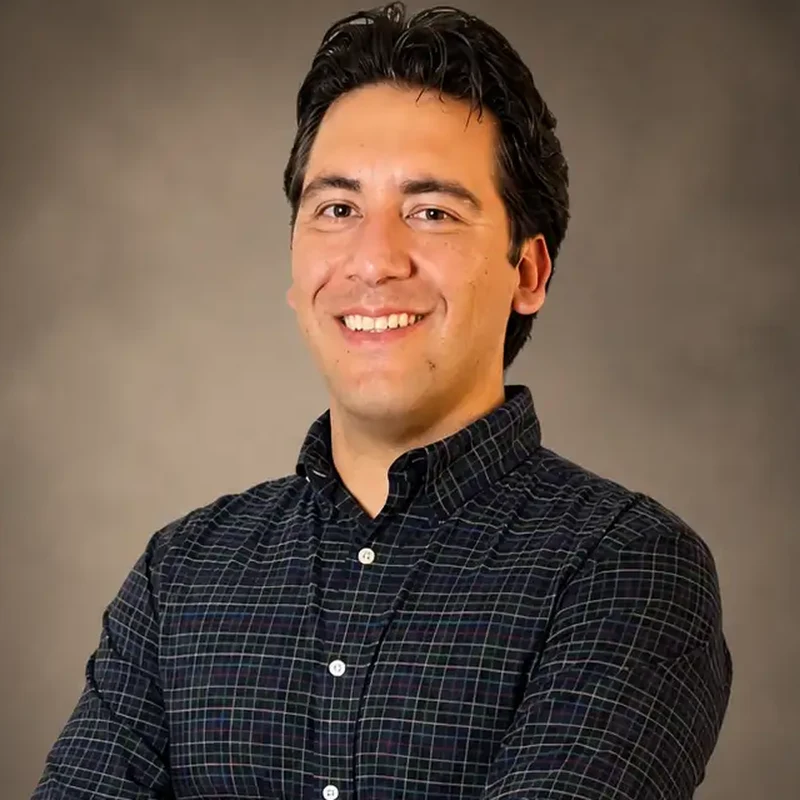
Your Camarillo
mortgage lender.
Camarillo is where a lot of Ventura County move-up buyers land, and move-up buying has its own financing problem: the timing of two transactions at once. I am a licensed mortgage loan officer and a licensed Realtor, so the loan and the offer are handled by one person. Hablo Español.

The hard part here is almost never qualifying.
Camarillo attracts buyers who already own something. People moving up from the coastal cities, families chasing schools, households that want a shorter commute than they have now. Newer and more uniform housing stock than Ventura or Oxnard means appraisals are generally cleaner and comparable sales easier to argue.
Which is why the financing question here is rarely whether you qualify. It is almost always the order of operations. You own a house. You want a different house. Both of those transactions involve the same money, and the sequence you choose changes what you pay, what you risk and whether your offer gets accepted at all.
Most people arrive at this having already decided by instinct rather than arithmetic. It is worth doing the arithmetic, because the gap between the best and worst structure for a given situation is real money.
The move-up question
- Sell first Cheapest and lowest risk. The problem is where you live in between.
- Buy first Smoother to live through. Requires either carrying both or bridging the gap.
- Contingent offer Possible, and visibly weaker unless your sale is already well advanced.
- See what is listed Inventory moves. The sequencing question does not.
Four ways to move up, and what each one costs you.
There is no universally correct order. There is an order that is correct for your equity, your income and your appetite for uncertainty, and the four honest options look like this.
Sell first and rent, or sell first with a rent-back that lets you stay in your old home briefly after closing. This is the cheapest and safest route, and the rent-back version removes most of the inconvenience that puts people off it.
Buy first while carrying both payments, if your income supports it. Simple, clean offer, no contingency, and it requires qualifying for two mortgages at once.
Buy first using the equity you have not yet released, through a structure that bridges the two transactions. It costs more than the other routes and it buys you a clean offer without needing to carry both payments on income alone.
Or write a contingent offer, which is the weakest position and occasionally the only one available. It can work when your current home is already listed or in escrow, because then the seller is being asked to take on much less risk.
Work it out in this order
-
1
What is your real equity After costs of sale, not the number in your head from the last valuation.
-
2
Do you qualify carrying both This single answer eliminates half the options immediately.
-
3
How much uncertainty can you live with Sell-first is cheapest and least comfortable. That trade is personal.
-
4
Then write the offer accordingly The structure decides what the offer can say, so decide it first.
A rent-back solves most of this.
The reason people avoid selling first is not financial. It is the fear of having nowhere to live. A rent-back removes most of that fear and is under-used in this market.
A rent-back is an agreement letting the seller stay in the home for a defined period after closing. Sell your house, close, collect your proceeds, and stay put while you buy the next one. You are now a cash-strong buyer with no contingency, which is a materially better position than you were in a week earlier.
It runs the other way too. When you are the buyer, offering a rent-back to a seller who is themselves moving up can make your offer the most attractive on the table without adding a dollar to the price. In a market full of move-up buyers, that is worth understanding.
There are limits on length and terms, and it needs to be structured properly rather than agreed on a handshake. But as a way of turning a weak contingent position into a strong clean one, it is the most underrated tool in a move-up market.
Why it works both ways
- As a seller it lets you close and stay, so you buy without a contingency
- As a buyer it can make your offer the most attractive without raising the price
- It removes the single biggest objection people have to selling first
- It needs proper structuring, including length and terms, rather than a verbal agreement
One person, both halves.
A move-up purchase is two transactions that have to interlock, and the usual arrangement gives you an agent for one part, a different agent for the other, and a lender who finds out what everyone agreed after the fact.
I hold both a California real estate license and a mortgage loan officer license. In Camarillo that means the person working out whether you can carry both payments is the same person deciding what the offer can safely promise, and the sale and the purchase get sequenced against one timeline instead of two.
If you would rather use your own lender, that is genuinely fine. I will still tell you whether the structure they are proposing is the right one for the order you have chosen.
What it changes here
- Your sale and your purchase get planned as one timeline rather than two
- The offer only promises what the financing can actually deliver
- Rent-back terms get negotiated by someone who knows what the loan needs
- Buying as well as borrowing? Here is my Camarillo real estate page and the live listings
Camarillo home loans, answered.
Should I sell my current home first or buy first?
Do I have to qualify for both mortgages at once?
What is a rent-back and why does it matter here?
Are contingent offers accepted in Camarillo?
Can I use the equity in my current home for the down payment?
Will I need a jumbo loan in Camarillo?
How does Camarillo compare to Thousand Oaks or Ventura?
Can you look at financing another lender has offered me?
Moving up in Camarillo?
Tell me what you own, roughly what you owe on it and what you are hoping to buy, and I will map the four routes with your real numbers so you can see what each one actually costs. No pressure and no obligation.
Read This Before You Buy in Ventura County
The 5 ways buyers overspend here, and how to avoid every one.
- The 5 ways buyers overspend here, and how to avoid each one
- Real payment math for Ventura County prices, so you don't overbuy
- The questions that save you money with any lender or agent (including me)
You're in. Check your inbox and texts in the next few minutes.
Something went wrong sending that. Please call or text me at 805.873.0660 and I will send the guide over myself.
No spam. You get the guide, and that's it unless you ask for more. I never share your info.
 Edgar Limon · Realtor & Loan Officer
Selling instead? Get a free home valuation , real numbers for your specific property, no strings. →
Please read. Everything on this page is general information about home financing and is not a loan commitment, an offer to lend, or a guarantee of any rate, term, cost or approval. Loan programs, guidelines, limits, eligibility rules and fees are set by lenders, investors and government agencies, and they change over time without notice. Anything described here may be different by the time you read it. Every borrower and every property is different, and nothing here has been prepared with your individual circumstances in mind. Nothing on this page is tax, legal or financial advice. Speak with a licensed loan officer about your own situation before making any decision, and verify current terms in writing. Licensing details appear in the footer below.